.png "How Microsoft 365 DLP Policies Protects Legal Work (3)")
The conversation around AI in contract management is growing fast. Tools like Claude Cowork are changing how legal teams review and analyze contracts. They bring speed, flexibility, and intelligent insights that were not possible a few years ago.
But speed alone does not replace structure. Intelligence alone does not replace governance.
When contracts become mission-critical assets, organizations need more than analysis. They need control, compliance, security, and accountability. That is where Contract Lifecycle Management (CLM)platforms continue to play a central role.
Contract Lifecycle Management (CLM) still matters because it provides governance, compliance, auditability, and system-level control that AI tools like Cowork simply cannot replace.
This blog clearly tends to the title. While AI-powered assistants can supplement workflows, there are specific, high-risk,and enterprise-grade areas where Cowork cannot replace CLM. For growing businesses and regulated enterprises, CLM remains the system of record, the compliance backbone, and the operational foundation of contract management.
When organizations manage a ton of contracts in a single year, contract handling stops being a legal task and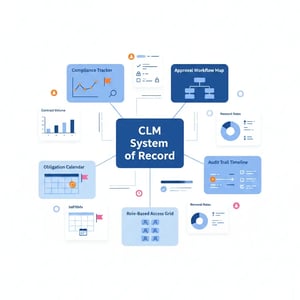 becomes an operational discipline. Volume introduces complexity. Complexity introduces risk. Risk demands structure.
AI tools like Cowork can read and analyze contracts. They can highlight clauses and summarize risks. However, they fail to offer systematic lifecycle management.
Enterprises need centralized repositories, managed workflows, metadata management, obligation management, renewal tracking,reporting dashboards, and audit trails. These are not nice-to-have features.These are must-have features for enterprises to operate at scale.
In industries such as financial services, healthcare,energy, and government contracting, compliance files need to be defensible.Every approval needs to be traceable. Every version needs to be archived. Every modification needs to be recorded.
A mature CLM system will ensure that every contract follows a predetermined lifecycle. Drafting, reviewing, negotiating, approving,signing, executing, tracking obligations, modifying, renewing, and archiving are all formalized steps.
Cowork does not enforce workflows. Cowork does not establish formalized approval paths. Cowork does not provide defensible audit trails across departments.
For enterprises dealing with multi-party and multi-jurisdiction contracts, the problem becomes even more daunting. Master agreements can extend across geographies, jurisdictions, currencies, and tax regimes. A single error in version control can create legal exposure.
CLM platforms are designed to handle this scale and structure. They integrate business rules directly into workflows. They enforce role-based permissions. They ensure that no contract bypasses required approvals.
Another area where CLM is irreplaceable is obligation tracking and renewal management.
A contract is not complete when it is executed. Many contracts contain ongoing obligations, performance milestones, reporting requirements, and auto-renewal provisions.
AI capabilities can detect obligations. However, they do not provide systematic reminders, escalation procedures, or calendar-based workflows based on organizational roles.
If the CLM system is not in place to track terminations and auto-renewals, the risk of missed terminations, unwanted auto-renewals,financial penalties, or non-compliance triggers exists.
Contract management in the enterprise is more than just understanding the contract. It is about controlling the contract over time.This degree of contract governance cannot be achieved by a research preview AI assistant.
In high-stakes environments, security and compliance certifications are not optional. These certifications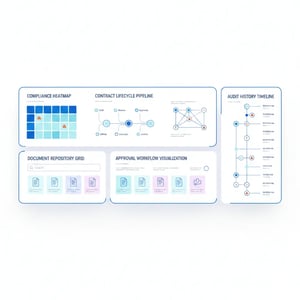 demonstrate that a platform meets recognized standards for data protection, operational controls, and risk management.
Cowork, currently in research preview status, does not offer formal enterprise security certifications. While it may store conversation history locally and not in external AI clouds, this alone does not meet regulated industry standards.
In industries where data residency is a concern, data location and infrastructure management are very important. Companies are required to demonstrate where their data is, who can access it, and how it is protected.
CLM solutions are designed to handle such enterprise-level compliance needs. They run in controlled infrastructure environments, which are often within the company’s Microsoft 365 environment, ensuring that the same level of governance is applied.
The other non-replaceable feature of CLM is its tight integration with ERP, CRM, and procurement systems.
Contracts are not standalone documents. They are linked to vendor on boarding, purchase orders, invoices, revenue, and customer management.
An enterprise-level CLM solution is tightly integrated with Microsoft Dynamics, Salesforce, procurement systems, and finance systems.
Cowork does not serve as a transactional system. It does not update ERP records. It does not trigger procurement workflows. It does not synchronize customer records.
For companies requiring formal e-signature workflows,structured routing is essential. Approval sequences, delegation rules, signing authority thresholds, and digital signature compliance must be enforced automatically.
CLM systems provide embedded e-signature integrations that track each step of the signing journey. Every signature is timestamped. Every action is logged. Every approval is recorded.
AI assistants can draft or review documents, but they cannot enforce enterprise-grade signing protocols.
Mission-critical legal operations also require system reliability, vendor accountability, and enterprise-level support.
Cowork is evolving rapidly. That innovation is valuable.However, rapid change also introduces potential instability. Community-based support through forums and GitHub may not meet the expectations of enterprise IT teams.
Established CLM vendors provide structured on boarding,implementation consultants, dedicated account management, and service-level agreements.
For organizations operating in regulated industries or managing complex legal operations, these factors are not negotiable.
In these environments, CLM remains the operational backbone, while AI remains a supportive layer.
Not all contracts are simple NDAs or vendor agreements. Many industries operate with highly complex contract structures that require systematic lifecycle governance.
Consider Master Service Agreements (MSAs) with multiple Statements of Work. Each SOW may have different timelines, pricing models, service levels, and termination clauses.
Managing the relationship between the master agreement and its evolving SOWs requires structured linking, version control, and cross-referencing.
Cowork can analyze an MSA. It can summarize clauses. But it cannot manage hierarchical contract relationships inside a governed repository.
Real estate leases present another challenge. Commercial tenancy agreements may contain clauses related to rent escalation, maintenance,insurance, subletting, and compliance.
Monitoring these on a ten-year or twenty-year basis involves reminders, reporting, and compliance tracking.
Licensing of patents involves tracking royalties, geographic restrictions, performance milestones, and audit rights. These financial aspects have to be linked to reporting mechanisms and tracked on a continuous basis.
Credit facilities and financing agreements involve covenants, repayment schedules, cross-default provisions, and regulatory reporting requirements.
These are not static documents. They are dynamic financial instruments that require lifecycle tracking.
AI tools can extract data from these contracts. But extraction is not management.
True contract management requires structured databases,automated alerts, compliance dashboards, and controlled access environments.
That is why CLM still matters deeply in complex contract environments.
To clearly understand why Cowork cannot replace CLM, organizations must evaluate key implementation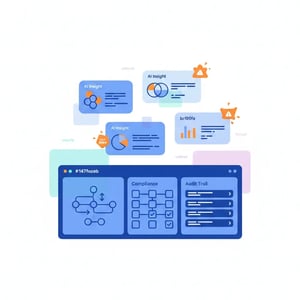 considerations.
From a security and risk perspective, Cowork remains a research preview tool. It is not recommended for regulated workloads. It does not yet offer formal security certifications.
There are also concerns about prompt injection risks when processing external documents. AI tools can be manipulated if external content includes malicious instructions embedded within text.
Furthermore, licensed attorneys must review all AI-generated outputs. This reinforces that Cowork is an assistant, not an autonomous legal system.
From a cost perspective, Cowork requires subscription tiers such as Claude Pro or Claude Max. Compute-intensive contract reviews may consume usage allocation quickly. Heavy workloads can hit usage limits.
Enterprise deployment introduces additional per-user costs.
CLM platforms, by contrast, are designed for sustained operational workloads without usage-based unpredictability tied to AI compute consumption.
From a technical standpoint, Cowork currently operates as a mac OS desktop application. There is no web interface, no Windows support, and no mobile access.
It requires an active internet connection. Access control is folder-based rather than workflow-based.
While MCP connectors extend functionality, the ecosystem remains in development.
CLM platforms are built for cross-device accessibility,structured permissions, and enterprise-wide deployment.
These technical limitations further reinforce why Cowork cannot replace a full CLM system in enterprise environments.
The most effective strategy is not choosing between AI and CLM. It is combining them intelligently.
For organizations with existing CLM platforms, the optimal model is a hybrid approach.
Cowork can handle speed-driven tasks, including first-pass reviews, high-volume simple agreements, and AI-assisted clause analysis.
CLM remains the system of record, responsible for workflow enforcement, obligation tracking, reporting, compliance documentation, and audit trails.
An effective integration pattern may look like this.
Cowork handles contract intake and initial analysis. It flags unusual terms or risk indicators.
Contracts that require structured review enter the CLM system for formal workflow processing.
The CLM platform remains the authoritative repository.
Cowork can later analyze contracts stored in CLM to generate insights and summaries.
In this model, each system plays to its strengths.
AI delivers intelligence.
CLM delivers governance.
Together, they form a powerful contract management ecosystem.
Why Dock 365 Improves Your CLM Foundation
Organizations running in the Microsoft 365 ecosystem can benefit from a SharePoint-based CLM solution such as Dock 365, which offers enterprise-level lifecycle management right within the Microsoft ecosystem.
Dock 365 offers contract management within SharePoint, workflow automation, metadata management, obligation tracking, and connectivity to Microsoft tools your teams are already using.
This ensures version management, approval process management, and compliance alignment across departments.
With AI tools for analysis support, Dock 365 becomes the solid foundation of your contract management processes.
It ensures governance compliance while enabling intelligent improvements at the intake and review stages.
CLM is still relevant because enterprise contract management needs structure, compliance, security, integration, and lifecycle management, which cannot be achieved by AI assistants alone.
Cowork is very useful for analysis. It improves intake,speeds up review, and provides insight.
However, it does not substitute certified systems, audit trails, workflow automation, obligation management, renewal management, and enterprise integration.
For organizations dealing with high volumes, regulated industries, or multiple contract types, CLM is not a choice. It is a necessity.
AI solutions are revolutionary.
However, revolution has to be built on a controlled platform.
The platform is Contract Lifecycle Management.
Ready to Build a Smarter Contract Ecosystem?
If your organization is managing contracts from within Microsoft 365, it is high time that you improved your foundation.
Dock 365 provides structured workflows, compliance-ready audit trails, obligation management, and enterprise-level contract management -all from within SharePoint.
When combined with intelligent AI tools for analysis, you get the best of both worlds: speed and structure, intelligence and control.
Schedule a free demo with Dock 365 today and learn how you can build a secure, scalable, and future-ready contract management systemthat grows with your business.
.jpg?width=1260&height=1205&name=Image%20(2).jpg)