
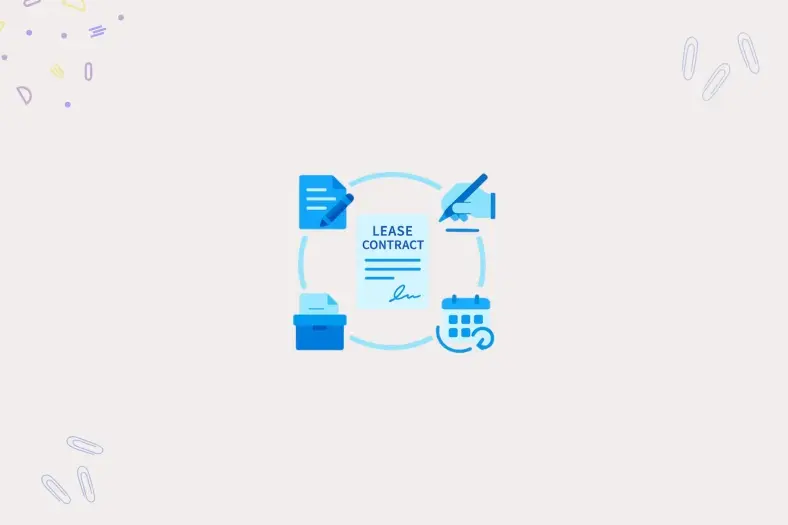
For many businesses, the deed of lease is seen as just another legal formality which, after being drawn up, gets put away somewhere until either a dispute occurs or a new term begins. This may sound like a sensible course of action, but it is one fraught with unnecessary risk.
Whereas a deed of lease has been viewed historically as merely a document to be filled out at the start of a leasing agreement, the reality is that each stage in the management of the lease, from ensuring it's enforceable, handling operational issues and risk, through to renewing or terminating the lease, must be properly handled.
If managed correctly, the result is a clear set of rights and obligations for both parties, with the potential for disputes minimized, as well as providing other business benefits.
It starts with verifying that your deed of lease will indeed be enforceable. In other words, the protection provided in the contract cannot help you if there is anything wrong with the legal side of things. To begin with, the execution of the deed must be carried out correctly to give you any chance of enforcing what you want.
It is normally required that leases exceeding 11/12 months are registered. Failure to register the deed means that the document cannot be used as evidence in court. This can be very problematic if you are trying to enforce any rights or if there is a dispute between the two parties in the lease arrangement.
Stamp duty adherence is equally vital. In case the deed does not get appropriately stamped in accordance with state legislation, there could be repercussions, including invalidation of the contract. Businesses often do not realize how significant this step can be; however, improper stamping will lead to unnecessary legal issues.
Ownership verification closes the integrity process. The lessee needs to ensure that the person leasing the property owns it before executing the deed of lease. Title deeds or ownership documentation review helps prevent possession disputes in the future. Such practices lay a solid legal groundwork for the agreement.
After the deed is signed, the process moves from legality to compliance. From that point, the deed of lease is no longer a piece of paper but part of business activities. The parties need to follow obligations associated with rent, utilities, maintenance, and property use regularly.
Another operational obligation involves rent escalations. In a commercial lease, there are rent escalation clauses that are specified by dates or percentages. Failure to keep track of when a certain date occurs, or failure to adjust, might have consequences for either party involved. Even minor errors can add up over time, causing discrepancies in payment.
Another operational obligation that needs to be tracked involves utility obligations. A deed of lease should be clear with regard to which party is responsible for paying for utilities like electricity and air conditioning, or even maintenance charges, for a particular period. Non-compliance with this clause might cause delays in payment and lead to fines.
Lastly, the authorized use clause is another type of operational obligation. The deed of lease typically states the type of operations that are allowed on the premises. Using the leased space for any other activity not covered under this clause might constitute a breach of contract. Therefore, monitoring authorized use can help avoid breaches in this clause.
Phase three in the lifecycle of a deed of lease is all about the prevention of risks.
An example of such obligations is the obligation to maintain insurance. It is not uncommon for the landlord to maintain building insurance and the tenant to operate and manage their business in the facility while insuring against liability. Failure to comply with this will be problematic for both parties. Obligations tracking is vital to ensure that the intended benefits arise from these provisions.
Building modification is another source of risks when dealing with a deed of lease. Although modifications may be necessary in some cases, most agreements stipulate that changes should only occur upon the owner's prior written consent. Alterations without authorization can result in breaches or disputes regarding reinstating the building at the end of the term.
Some deeds of lease come with clauses allowing the landlord to undertake repairs on behalf of a tenant that fail to perform the necessary maintenance. It would be advisable to monitor such issues because unexpected expenses could result.
The final stage in a deed of lease's lifecycle may be the most financially critical one. This is where renewal dates, exit requirements, and other conditions will become relevant.
Renewal notices in most deeds of lease must be made several months prior to the expiry of the document. Failing to do so will render the renewal impossible or place the tenant on less favorable terms. In most cases, a new deed of lease must be signed for the extension to be valid. This calls for the need to track deadlines.
There are also penalties associated with the failure to move out when the deed expires, and no new deed is signed to extend the tenancy. Such penalties are mostly double the final payment in the lease document. If the expiry of the lease is overlooked, penalties could translate to huge financial costs for the tenant.
The reinstatement condition also impacts the process at this stage. Tenants must put the premises back to their original condition, apart from any normal wear and tear. The tenant must fulfill such an obligation to get his security deposit returned.
Tracking a deed of lease manually will lead to oversight of some important steps in the process. Microsoft 365 can help manage a deed of lease effectively by converting them to workflows.
SharePoint can become a centralized repository for storing the lease deed, ownership documents, and all relevant documents pertaining to the site.
Through Power Automate, renewal notifications, rental escalations, and insurance notifications can be scheduled automatically. With this, there will be lesser reliance on manual calendar alerts for compliance.
Microsoft Forms can become part of the periodic audit of the property that will ensure compliance with maintenance requirements.
All the mentioned solutions make lease administration more than just storing deeds, but a process where you are actively managing your leases.
For companies that seek more visibility, dock 365 (a platform built on Microsoft 365) takes things further. Through automation of contract obligations and milestone tracking, dock 365 ensures a smooth lease cycle experience for everyone.
The deed of lease is often treated as a static document filed somewhere in the drawers and forgotten once the document is signed by both parties involved. But the deed of lease goes beyond that.
Organizations that treat their lease agreement lifecycle as an asset are able to enhance their awareness about the obligations, prevent any conflicts, and minimize the possibility of oversights when renewing or exiting their lease agreements. This method makes the administration of leases much more effective than it usually is.
By taking advantage of technologies such as Microsoft 365 and Dock 365, legal departments are able to store all of their lease documents, automate key moments, and fulfill their responsibilities without a hitch.
In case you are looking to improve your approach to lease management and minimize risks, schedule a demo session with Dock 365 and see what smarter lease lifecycle management can do for your business.
Like our content? Subscribe to our newsletter on LinkedIn for more insights and updates.
Schedule a live demo of Dock 365's Contract Management Software instantly.


© 2026 Dock 365 Inc. All Rights Reserved.