
The conversation around artificial intelligence in contract management is growing rapidly. AI-powered assistants are transforming how legal teams read, summarize, and analyze contracts. Tools like Cowork introduce speed, flexibility, and intelligent pattern recognition that were not easily available just a few years ago.
However, intelligence alone does not equal control. Speed alone does not equal governance.
When contracts become business-critical assets, organizations need more than analysis. They need structure, traceability, compliance safeguards, workflow discipline, and integration with enterprise systems. That is precisely where Traditional CLM platforms continue to outperform Cowork in critical areas.
This blog answers the question clearly and directly: while Cowork can assist with contract review and research, it cannot replace a structured, enterprise-grade Contract Lifecycle Management system.
For growing companies and regulated enterprises, CLM remains the operational backbone of contract management.
As organizations grow, contract handling stops being an isolated legal task and becomes a structured operational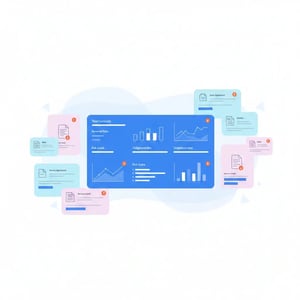 discipline. When a company manages hundreds or thousands of agreements annually, manual coordination becomes risky and inefficient.
This is where contract lifecycle orchestration becomes essential.
A Traditional CLM platform enforces structured workflows. Contracts are routed through predefined approval chains. Legal, finance, procurement, and business teams follow formal review paths. Signing authority thresholds are applied automatically.
Cowork does not provide workflow management. It cannot route contracts through multi-layer approval hierarchies. It cannot enforce delegation rules or structured signature routing.
Without workflow enforcement, there is no guarantee that every agreement receives the required review. This exposes organizations to approval bypass risks and internal control failures.
Another critical limitation is obligation tracking.
A contract does not end when it is signed. It contains renewal dates, milestone obligations, reporting requirements, performance metrics, and termination windows. Missing an auto-renewal deadline can create serious financial impact.
Traditional CLM platforms monitor renewal dates and termination clauses automatically. They generate alerts. They trigger escalation workflows. They assign responsibility to specific roles.
Cowork can identify obligations within text. However, it does not track them over time. It does not send automated alerts. It does not manage obligation calendars or escalate missed milestones.
This difference is fundamental. Detection is not the same as management.
In regulated industries such as healthcare, financial services, energy, or government contracting, auditability is mandatory. Every approval must be traceable. Every document revision must be recorded. Every action must be logged.
Traditional CLM systems maintain full version control and enterprise-grade audit trails. They record who changed what and when. They preserve historical records for compliance and legal defensibility.
Cowork does not maintain version history or controlled audit logs across departments. It analyzes documents, but it does not govern them.
When organizations operate across multiple jurisdictions and currencies, the need for formal lifecycle control increases. Master agreements linked to multiple statements of work require structured relationship management.
Traditional CLM platforms handle hierarchical contract relationships within governed repositories. Cowork cannot manage contract structures at that level.
This is why lifecycle orchestration remains one of the most critical areas where Traditional CLM platforms outperform Cowork.
Enterprise contract management is impossible without a centralized system of record.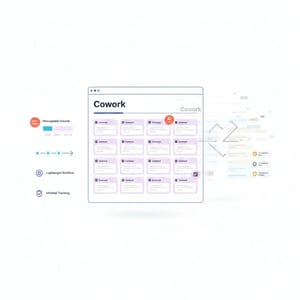
A Traditional CLM platform provides a centralized contract repository. Every contract is stored, indexed, and structured within a controlled database. Metadata tagging enables quick classification by counterparty, value, expiration date, business unit, or clause type.
Cowork does not function as a centralized repository. It does not store, index, or organize contracts across an enterprise environment.
Metadata management is another crucial distinction.
CLM platforms automatically extract key data fields and populate structured databases. Contract value, renewal terms, jurisdiction, indemnification clauses, and governing law can be indexed for reporting and analysis.
Cowork does not automatically populate enterprise databases with structured metadata. Its analysis remains document-level rather than portfolio-level.
The difference becomes even more visible in advanced search capabilities.
Traditional CLM platforms allow users to search across thousands of contracts using filters. You can search by clause language, by counterparty risk level, by contract value threshold, or by termination type.
Cowork does not provide advanced search across a managed repository because it is not designed as a portfolio management system.
Without centralized indexing, organizations cannot gain visibility across their contract landscape. That visibility is essential for compliance reviews, risk mitigation, and executive reporting.
Another area where CLM outperforms is contract analytics and reporting.
Enterprise leaders require dashboards showing contract volume, renewal exposure, financial obligations, compliance metrics, and risk distribution.
Traditional CLM platforms provide portfolio-wide insights. They generate executive reports. They support compliance audits. They enable spend analysis across vendor agreements.
Cowork does not offer a contract analytics dashboard. It does not aggregate contract values or calculate enterprise-wide financial exposure. It does not generate compliance reports for regulatory review.
Risk scoring is also a structured feature in many CLM platforms. Contracts can be evaluated automatically against internal policy standards. Deviations are flagged systematically.
Cowork can highlight unusual clauses but does not apply consistent, organization-wide risk scoring frameworks embedded in workflow governance.
This distinction is critical.
Intelligent analysis is helpful. But enterprise decision-making requires structured data, dashboards, and reporting systems.
That infrastructure exists within Traditional CLM platforms, not within AI research preview tools.
Contracts are not standalone documents. They are directly connected to procurement systems, finance systems,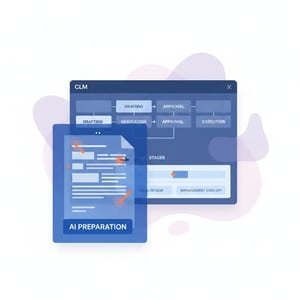 customer relationship management tools, and enterprise resource planning platforms.
Traditional CLM systems integrate with ERP platforms such as SAP and Oracle. They connect with CRM systems. They synchronize with procurement workflows. They trigger downstream financial processes.
Cowork does not integrate with ERP systems in a transactional manner. It does not update purchase orders. It does not sync revenue forecasts. It does not embed itself within enterprise architecture through APIs designed for governance control.
This makes Traditional CLM platforms significantly stronger in enterprise integration and data management.
E-signature workflows are another area of separation.
CLM platforms include native integrations with digital signature providers. They enforce approval sequences before signatures are requested. They log every signing action. They ensure compliance with corporate signing authority rules.
Cowork does not provide built-in e-signature workflow enforcement.
When it comes to collaboration and negotiation, CLM systems also offer structured tools.
They provide redline comparison features. They enable side-by-side version tracking. They maintain clause libraries to ensure consistent language usage. They enforce negotiation playbooks through workflow controls.
Cowork does not provide redline comparison tools within a governed negotiation environment. It does not enforce clause standards through structured approval mechanisms.
Real-time collaboration inside a controlled contract system, with commenting and discussion threads tied to specific clauses, is also absent.
For enterprises managing complex negotiations across departments, these tools are essential.
Security and governance elevate the difference even further.
Traditional CLM platforms provide role-based access control (RBAC). Permissions are structured by department, role, and authority level. Sensitive contracts can be restricted to specific users.
Enterprise-grade CLM systems maintain detailed audit logs. They provide controlled data residency options. Many hold recognized compliance certifications such as SOC 2.
Cowork, positioned as a research preview tool, does not offer enterprise security certifications at this stage. It does not provide the same structured access governance or enterprise audit trail depth.
In regulated industries, security certifications are not optional. They are required for vendor approval.
Legal certainty is another important concern.
AI systems carry hallucination risks. They may generate incorrect interpretations or inconsistent outputs. They explicitly require attorney review of generated analysis. They are positioned as assistance tools, not legal authorities.
Traditional CLM platforms do not provide legal advice, but they ensure procedural certainty. They enforce structured review processes that reduce operational risk.
When legal exposure is high, reliability matters more than speed.
That is why mission-critical legal operations continue to rely on structured CLM environments.
Not all contracts are simple NDAs or vendor agreements.
Master Service Agreements linked to multiple Statements of Work require structured management across years of performance. Licensing agreements demand royalty tracking and milestone monitoring. Real estate leases require rent escalation monitoring and compliance reminders.
Credit facilities and financing agreements involve repayment schedules, covenant monitoring, and regulatory reporting obligations.
These contracts are dynamic financial instruments.
Cowork can analyze clauses within these agreements. It can summarize risks. It can extract insights.
But it cannot manage long-term lifecycle tracking tied to automated alerts and structured compliance dashboards.
True obligation management requires database integration, reminder engines, reporting systems, and escalation workflows.
Traditional CLM platforms are designed for that purpose.
Analysis is valuable. Management is essential.
This is the key distinction.
The most effective contract management strategy today is not choosing between AI and CLM. It is combining them wisely.
Cowork can support first-pass reviews and accelerate initial risk identification. It can assist legal teams with clause analysis and research.
Traditional CLM platforms remain the authoritative system of record. They manage workflows, approvals, renewals, compliance documentation, and audit logs.
In a hybrid model, AI enhances efficiency while CLM ensures governance.
This is not competition. It is structured collaboration.
But replacement is not realistic in enterprise environments.
Traditional CLM platforms still outperform Cowork in critical areas because they deliver enforceable structure, portfolio visibility, integration depth, compliance safeguards, and enterprise-grade reliability.
Traditional CLM platforms outperform Cowork in critical areas because they provide workflow automation, obligation tracking, centralized repositories, advanced search, analytics dashboards, enterprise integration, security certifications, collaboration tools, and governance controls.
Cowork enhances contract analysis.
However, it does not replace lifecycle orchestration, compliance enforcement, audit trails, portfolio intelligence, or system-level integration.
For organizations handling high volumes, complex agreements, or regulated workloads, CLM is not optional. It is foundational.
AI accelerates.
CLM governs.
And governance remains non-negotiable in enterprise contract management.
Build a Stronger Contract Foundation with Dock 365
If your organization operates within Microsoft 365, your contract management system should align with your existing ecosystem.
Dock 365 delivers structured Contract Lifecycle Management directly within SharePoint. It provides workflow automation, obligation tracking, metadata management, approval routing, audit trails, and enterprise-grade governance.
With Dock 365, you gain a secure, scalable, and compliance-ready contract management foundation. When combined with AI-powered analysis tools, you achieve both intelligence and control.
If you are ready to move beyond document analysis and build a structured, future-ready contract management system, Schedule a free demo with Dock 365 today and discover how your organization can strengthen governance without sacrificing speed.
.jpg?width=1260&height=1205&name=Image%20(2).jpg)