
In any growing business, it is within the confines of a contract where day-to-day activities are nurtured. Be it forming new vendor relationships, creating client onboarding, hiring talent, or closing a major deal, the execution of a contract marks the ignition of trust. However, the journey to take that contract from drafting to fully signed is often slower than it needs to be.
Well before any signature is requested, teams have already spent hours shaping accurate and compliant documents, reviewing pricing, terms, deliverables, and risk, and going through negotiation rounds that require focus and clarity. This should never be a roadblock after all that hard work.
Conventionally, organizations have relied on wet signatures, hard copy contracts, scanned PDFs, and email chain conversations. These traditional wet methods reduce speed and introduce unnecessary delays at a time when it is most crucial for a deal and a part of a contract’s lifecycle, which should not be slowed down for a deal simply for logistical reasons.
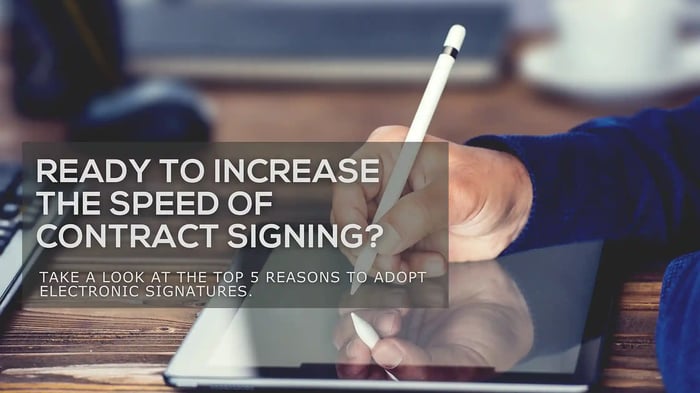
And this exactly where electronic signatures are bringing innovation to the signing process. With electronic signing, a business can move a contract from drafting to signing in mere minutes. Agreements are not printed or physical copies are not posted. People are not scheduled to meet in person to sign. People can sign from anywhere, with anything, anytime. Businesses are therefore signing more agreements in less time.
Beyond speed, electronic signatures enhance the safety of a contract. They add traceability, verification, and compliance that other older methods of signing lack. It is also beneficial for the signers, legal teams, and decision makers because this system ensures accuracy and transparency without manual chasing or missing paperwork.
If your current signature process involves follow-up emails that drag on and on, misplaced attachments, expensive courier deliveries, or long wait times just because a stakeholder is remote, then adopting electronic signatures will increase your contract operations tenfold. To give you further insight, this article presents five reasons businesses should adopt electronic signatures as part of their contract management system right now.
What happens is that after a contract negotiation is finished, it has to be processed for approval and signature by internal teams. But when this final phase is not handled through a centralized system, it leads to a mess, with emails going haywire across different platforms, changes being misplaced, and different contracts being tracked using different tools for different aspects of this approval and signature phase.
With a company going electronic with its contract management system, all contracting activities, including signatures, can be managed from a common platform. This common contracting platform, which is used for creating, reviewing, or storing contracts, is then utilized for sending signatures too. Sharing, storing, or archiving signed contracts is not required.
This is a system in place to ensure consistency. Every participant knows where to sign and where to retrieve the papers later. It removes any confusion regarding which thread holds the latest file or who signed off their part. It just becomes very easy for both parties to execute.
More importantly, once the contract is fully signed, it automatically goes back to the contract repository. This eradicates the mistake of not uploading the signed contract to the system after signing. With all documents residing in one safe space, businesses increase their visibility, compliance, and velocity at the same time.
Signing, in a centralized manner, is more than just a matter of convenience. It reduces friction in the contract execution process, allowing legal cycles to be completed faster, and it ensures the execution of contracts seems like a seamless process, rather than a manual.
One of the advantages that come with using electronic signature is improved visibility. Anyone who has ever signed a paper physical signature knows that it is difficult to ascertain information on who opened the file, who signed it, and who is responsible for delaying the signature of the file when using this method.
Where there would have been uncertainty with traditional signatures, there is no uncertainty with electronic signatures. It is now possible to monitor every document being signed for approval. The system will indicate who opened it, who signed it, and who is yet to sign it. All these activities are time-stamped with specific date information, forming the basis of an irrefutable audit trail.
What attorneys find valuable about audit trails is that they demonstrate authenticity in regards to the signing as well as the validity of a contract. In industries that cater to regulated sectors such as banking, medicine, or legal, auditability plays a critical part in internal audits as well as in dispute resolutions.
Moreover, electronic signatures facilitate automation of the multi-signature approval process. Once the individual signatory completes his/her task, the document passes on automatically to the other individual who needs to sign it. This not only increases efficiency but minimizes waiting times for the entire contract procedure.
Centralized contract approvals further mean that your organization maintains the entire signed contract inventory. No contract will go missing in your organization. This is because all documents for the contract will be stored safely within the contract management system.
Such levels of control can improve security, governability, and organizational IQ. Organizations will have information about signing data, which they can use to inform risk and compliance reporting, among other functions. This heightened level of awareness enables businesses to make better-informed decisions.

Contract version management is one of the least talked-about challenges in contract management. Even in cases where organizations implement point solutions for electronic signatures, the underlying problem, in this case, remains hidden, as signed contracts do not get replicated into the central store. Instead, there will be versions in the email threads, on personal computers, or in the common drive.
A contract management system with electronic signatures helps address the issue of version control. After all signature pages have been signed, the current version is automatically maintained within the virtual repository system. A problem of referring to old draft versions or downloading contracts for negotiations from a wrong version does not arise.
Versioning is important for organizations that frequently have amendments, renewals, or addendums. A wrong document can be a source for increased legal or financial risks if it is utilized during negotiation or renewal processes. A new agreement can be missed, incorrect prices might be applied, or compliances could fail.
With automated version control, the most recent signed copy is always the one that stakeholders reference. This reduces disputes, accelerates renewals, and maintains clarity throughout the entire contract lifecycle. Nothing is left to chance, and everyone works from the same accurate source.
Businesses also benefit from searchability. Instead of scanning through emails, employees can quickly search the repository for completed contracts, renewal dates, or compliance terms. This increases productivity, speeds up audit responses, and enhances collaboration across departments.
Ultimately, strong version control is not about document organization alone. It is about protecting the integrity of legal agreements, reducing risk, and preserving operational discipline.
An often-asked question from businesses in the transition phase to e-signatures regards their legal validity. In fact, the electronic signature has been validated for decades in the major regions of the world and in countries such as the United States, Europe, Canada, and Australia.
The United States has two significant bodies of law that provide enforceability to digital signatures. The first one is the Uniform Electronic Transactions Act. This act recognized and enforced the use of digital signatures. The other is the Electronic Signatures in Global and National Commerce Act, whose scope extends to interstate and foreign commerce.
These regulations together ensured that the e-signatures have equal recognition to that of the handwritten signatures. In other major economies, there are also laws to encourage the application of e-signatures. This acceptance worldwide has led to industries embracing the shift from the paper process to the e-processing method.
The legal effectiveness of electronic signatures is based on their traceability. Digital signatures contain electronic proofs such as IP addresses, timestamps, identity verification of electronic signtatures, and verification of electronic signatures. In this way, contract disputes can be resolved. The enforceability of electronic signatures can be seen.
The current judicial system views this system of auditing much stronger than signatures on papers, as these signatures are easily forged, misplaced, or damaged. Through this system of electronic evidence, businesses can now be assured of the safety of their contracts.
 5. The Client Experience Becomes Faster, Clearer, and More Convenient
In some sectors, the waiting time involved at the signing stage can result in issues of customer satisfaction. Ensuring clients can only download, sign, scan, and send the documents back can be arather slow process. This will appear like some extra work, not business, to busy individuals.
The challenge of physical signature friction is addressed by electronic signature software. Clients will be able to electronically approve contracts on devices of their choice, and there will be no need to have meetings to be signed afterwards and pass on to the other party.
A better signing experience will result in a better understanding. All this is possible with electronic signatures because clients can take their time to understand different clauses, terms, and conditions. This would have been a problem with manual signatures because people treat documents just like paperwork.
Convenience increases completion speed as well. When signing takes only a few clicks, contracts get executed faster, projects start sooner, and companies accelerate revenue recognition. A shorter signature cycle also improves vendor relationships and supports stronger deal momentum.
In competitive markets, customer experience is a differentiator. Companies that remove barriers during contracting build trust early in the relationship. They demonstrate modern operations, responsiveness, and respect for customer time.
Electronic signatures elevate this experience across internal teams as well. Sales, legal, and procurement gain a shared workflow that reduces miscommunication and maintains clarity throughout the entire contract journey.
If your organization has not yet adopted electronic signatures into its contract management workflow, now is the time. Businesses are moving toward digital execution because it is faster, safer, and more reliable than traditional methods. The signing stage has been transformed by modern technology, allowing companies to send, sign, and execute agreements with unprecedented efficiency.
Electronic signatures accelerate contract lifecycles, improve version control, enhance accuracy, and strengthen compliance through detailed audit trails. They deliver legally binding results recognized across the globe. Most importantly, they support a better signing experience for clients, vendors, and internal teams.
The future of contract operations is digital, and electronic signatures are the foundation of that transformation. Companies that embrace this change save time, reduce cost, and increase productivity-all while improving legal governance and business agility.
Ready to modernize your contract processes? Dock 365 integrates with leading electronic signature platforms to streamline approvals, increase visibility, and automate secure document execution. Transform your contract lifecycle from start to signature.
Schedule a free demo with Dock 365 today and experience smoother, faster, and smarter contract management.