

Contract Lifecycle Management platforms are built to bring order, governance, and consistency to contract processes. They centralized documents, automate approvals, and create a system of record that legal and business teams can trust. Yet even the most capable CLM platform has limits. It follows defined workflows, depends on structured inputs, and often struggles with volume, nuance, and speed when contracts arrive in unpredictable forms.
This is where Claude Cowork becomes a powerful addition. Rather than competing with CLM systems, Claude Cowork works alongside them, adding intelligence before contracts enter the system, accelerating reviews while workflows run, and unlocking insight from contracts after they are stored. When paired with a robust CLM like Dock 365, it helps organizations move from reactive contract handling to proactive contract intelligence.
This blog explores how Claude Cowork enhances the contract lifecycle across three critical phases: pre-CLM workflow enhancement, post-CLM insight generation, and parallel specialized reviews. Together, these capabilities help teams reduce friction, surface risk earlier, and extract more value from every contract.
Why CLM Platforms Need Intelligent Support
CLM platforms are designed around structure. They function best when the contract is clear, standard, and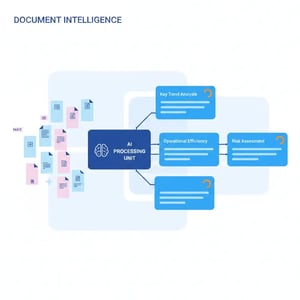 predictable. However, the actual contracts received vary by source, form, and pressure. There is increasing pressure on the legal function to accelerate contract review, handle greater volume, and deliver more clarity to the business.
Claude Cowork fills the gap by acting as an intelligent layer over the CLM system.
It reads,understands, and interprets contract language in a way that complements workflow automation. Instead of forcing every task into the CLM, Claude Cowork handles analysis, preparation, and insight generation so that the CLM can focus on governance and execution.
Pre-CLM Workflow Enhancement: Preparing Contracts for Success
Smarter Intake and First-Pass Processing
The moment a contract enters the organization sets the tone for everything that follows. Intake and initial processing are supported by Claude Cowork, which evaluates contracts before they are actually handled by the CLM platform. This is a first-pass triage, so the team gets a sense of what they are getting into.
Claude Cowork scans the incoming agreements for complexity, out-of-the-ordinary clauses, or unorthodox contract terms. This allows an initial assessment of the level of risk associated with a contract. In this case, higher-risk agreements are treated as a priority, while the less risky ones are expedited through the process as quickly as possible.
Claude Cowork also aids in document cleaning by maintaining uniform document formatting and structure. This ensures that contracts are properly formatted and structured from the onset to automatically feed into the CLM system. At the same time, basic data extraction occurs by pinpointing critical words such as dates, obligations, and commercial information that can eventually be used to automatically complete metadata fields in the CLM system.
Accelerating Reviews Before Negotiations Begin
Reducing Friction in Early Legal Review
Contract review often slows down before formal negotiations even start. Claude Cowork helps accelerate this phase by preparing the ground work. It can generate initial draft red lines, allowing legal teams to start negotiations from an informed position rather than a blank slate.
Before a contract enters formal approval workflows, Claude Cowork performs playbook compliance checks, comparing the document against established standards and preferred language. This ensures alignment early and reduces the number of revisions later in the CLM process.
By surfacing issues such as missing clauses, unfavorable terms, or inconsistent language, Claude Cowork enables early issue identification. Contracts can then be routed through the CLM system with the right level of scrutiny, saving time and reducing back-and-forth.
Claude Cowork also conducts comparison analysis,evaluating third-party contracts against internal templates. This gives legal teams clarity on deviations before formal CLM workflows begin, making negotiations more efficient and predictable.
Managing High-Volume, Low-Complexity Contracts
Keeping CLM Focused on What Matters Most
Not every contract needs the full weight of a CLM workflow. High volumes of routine agreements can overwhelm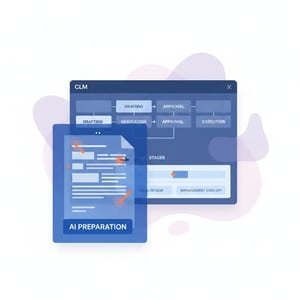 systems and teams alike. Claude Cowork helps manage low-complexity contracts outside the core CLM flow, preserving capacity for more strategic work.
During periods of heavy demand, such as NDA surges, Claude Cowork can handle overflow processing, reviewing standard agreements and providing quick assessments without clogging CLM approval chains. Similarly, standard vendor agreements that follow known templates can be processed efficiently without full workflow escalation.
For urgent business needs, Claude Cowork supports quick turn around reviews, offering immediate insights while formal CLM approvals continue in parallel. This flexibility keeps deals moving without sacrificing control.
Claude Cowork also enables a form of vendor self-service, allowing business teams to get preliminary answers and guidance without direct access to the CLM system. This reduces legal bottlenecks while maintaining consistency and oversight.
Post-CLM Enhancement: Unlocking Portfolio Intelligence
Seeing the Bigger Picture Across Contracts
Once contracts are stored in a CLM system, their value should not stop at compliance. Similarly, portfolio analysis is also improved if you use "Claude Cowork," which makes use of a large number of agreements to identify patterns, prospects, and perils.
Bulk contract review enables teams to explore their entire contract repository to inspect for the presence of particular clauses, obligations, or contradictions. This can be especially important in the context of a compliance sweep. A sweep in this context means an organization wants to make sure it's still in compliance with a particular regulation or policy before the contracts are signed.
Even during mergers, acquisitions, and audits, Claude Cowork helps with due diligence where CDA can analyze contract portfolios quickly and highlight potential risks, dependencies, and change of control issues that can take weeks to uncover otherwise.
In addition to the above, Claude Cowork also helps with contract migration; this includes checking the legacy contracts before they're migrated to the new CLM system.
Turning Contracts into Organizational Knowledge
From Stored Documents to Usable Insight
Contracts contain a wealth of institutional knowledge, but it often remains locked away. Claude Cowork transforms CLM repositories into living knowledge bases. It generates briefings and summaries that help executives and teams quickly understand key terms without reading full agreements.
By supporting research and Q&A, Claude Cowork answers questions across the entire CLM repository. Legal and business users can be clear about obligations, rights, and trends with no manual searching.
Claude Cowork also contributes to template development, writing new clause language based on the historical contract data stored in the CLM. Thus, it ensures that templates evolve through real-world usage rather than static assumptions.
For on boarding and continuous improvement, Claude Cowork supports the drafting of training material, capitalizing on best practices and recurring patterns across contracts. This strengthens institutional learning and consistency.
Parallel Workflows: Specialized Reviews Without Delay
Deep Expertise Without Bottlenecks
Some contract reviews require deep specialization that can slow down standard workflows. Claude Cowork supports parallel specialized reviews, allowing detailed analysis to happen alongside CLM processes rather than within them.
For privacy and data protection, Claude Cowork performs focused reviews of GDPR and data-related clauses while the main contract moves through approval. Similarly, it conducts IP-focused analysis,ensuring intellectual property terms are thoroughly examined without holding upthe broader workflow.
Claude Cowork also supports regulatory compliance checks, analyzing contracts for alignment with specific legal frameworks while CLM handles routing and approvals. In parallel, it performs financial term analysis, extracting and modeling payment terms, penalties, and obligations for deeper financial insight.
This parallel approach keeps workflows moving while ensuring no critical detail is overlooked.
Why Claude Cowork and Dock 365 Work Better Together
Claude Cowork is most effective when paired with a strong CLM foundation. Dock 365, built natively on Microsoft SharePoint, provides the governance, version control, and lifecycle automation organizations need. Claude Cowork adds intelligence on top of that structure.
Together, they create a contract ecosystem where preparation is smarter, reviews are faster, and insights are continuous. Contracts are no longer just managed—they are understood.
Conclusion: Enhancing CLM Without Replacing It
Claude Cowork does not attempt to replace CLM platforms.Instead, it strengthens them by addressing the gaps that workflows alone cannot fill. From pre-CLM intake and review acceleration to post-CLM portfolio analysis and knowledge generation, Claude Cowork expands what contract teams can achieve.
When combined with Dock 365, organizations gain a complete contract management experience-structured, intelligent, and scalable. Contracts move faster, risks surface earlier, and insights reach the people who need them most.
If your organization already manages contracts in Microsoft 365, it is time to go beyond basic lifecycle management. Dock 365 provides the structure and control your CLM needs, while intelligent tools like Claude Cowork unlock deeper value from every agreement.
Schedule a free demo with Dock 365 and explore how we can help you build a smarter,more connected contract management ecosystem-right inside SharePoint.
.webp)