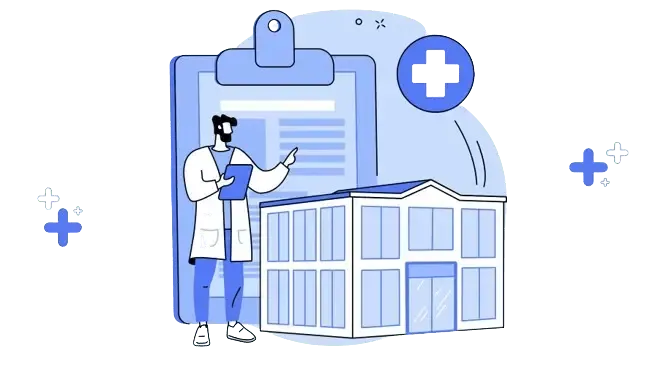

Health care businesses deal with some of the most critical contracts within the business world. These include contracts with physicians, payers, vendors, Business Associate Agreements, and patient service contracts. In each of these, there is some information that needs to be kept secure. Even a minor lapse in any of these areas could raise security concerns.
This makes security a major consideration when choosing healthcare contract management software. Healthcare teams need more than a digital place to store agreements. They need a controlled environment that protects confidential contract information, tracks important activities, and supports consistent internal processes.
One important security consideration is SOC 2 Type II compliance. It provides independent assurance about how a service organization's controls operate over a defined period. For healthcare organizations evaluating contract lifecycle management (CLM) solutions, this status offers useful information about the platform's security practices and operational controls.
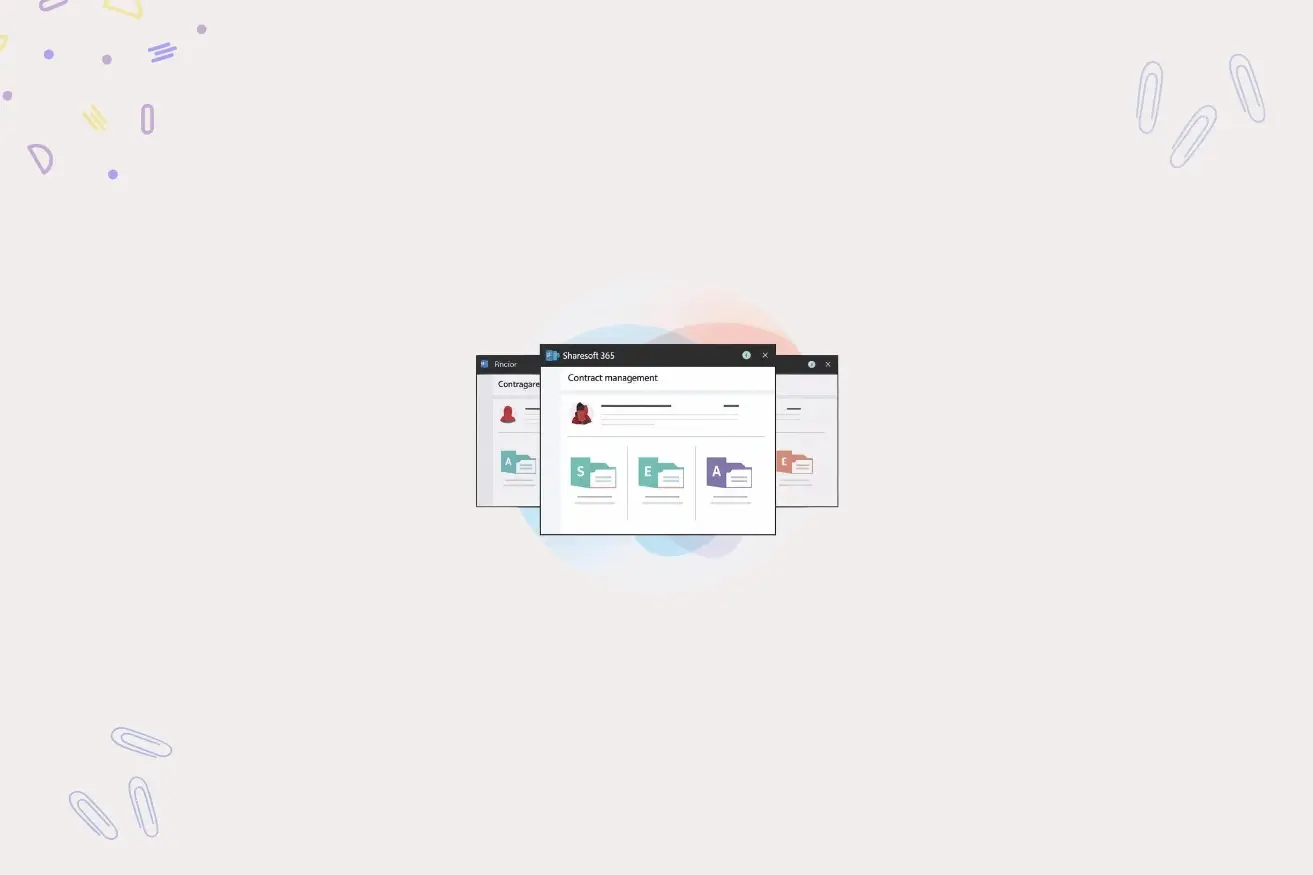
Dock 365 provides SOC 2 Type II compliant contract management capabilities built around the Microsoft 365 environment. Its approach brings contract storage, access management, document collaboration, approvals, and audit visibility into an organized workspace. Healthcare teams can manage agreements while working within the Microsoft tools they already use.
But what does SOC 2 Type II actually mean for healthcare contract management? Why should healthcare organizations look for this status when evaluating a CLM solution? And how does Dock 365 help teams manage contracts with greater visibility and control?
Let's look at why security assurance matters and how it connects to everyday healthcare contract operations.
1. Healthcare Contracts Carry Sensitive Data. Can Your CLM Protect Them?
In the context of healthcare agreements, there are several departments, external parties, and types of confidential information that come into play. Legal departments evaluate contractual terms, procurement departments handle relationships with vendors, finance departments look at payment terms, while operational departments deal with service commitments.
Access to various documents and contractual terms may be required by different departments. Without proper access control measures, confidential information might be available to individuals who should not have access to it. Documents may be moved from one mailbox, to shared folders, and personal computers with no documentation of transactions.
This situation shows why contract data security plays a vital role in the process of managing healthcare contracts. One should keep in mind how agreements are stored, how access to them is controlled, how transactions are documented, etc.
What Does SOC 2 Type II Mean for Healthcare Contract Management?

SOC 2 is a framework that was created by the American Institute of Certified Public Accountants (AICPA). This framework measures a service organization controls based on the Trust Services Criteria which are Security, Availability, Processing Integrity, Confidentiality, and Privacy.
The above criteria are directly associated with the security of the contract management software because it includes issues such as document protection, user rights management, system availability, and contract workflow efficiency.
The SOC 2 Type II assessment goes further than just checking the adequacy of the security controls design. The effectiveness of security controls operation during the period of observation is being checked. The independent auditor analyzes the evidence to assess the compliance of the control operation with the documentation.
It is important to consider the difference between the two SOC assessments when the healthcare organizations assess the software provider. The controls may be designed but still not be operated properly.
SOC 2 Type II compliance provides an independent assessment of the service organization's control environment. It gives customers a stronger basis for evaluating how their contract information is protected.
For Dock 365, communicating this status clearly helps healthcare buyers understand the security assurance associated with the platform. Instead of leaving visitors to search through technical documentation, the product page should present the status in a visible and straightforward way.
Why Healthcare Organizations Should Pay Attention to SOC 2
Healthcare organizations collaborate with external service providers who may have access to sensitive business information. Moreover, the collaboration may involve processing PHI. Consequently, it is essential to consider the security of those service providers carefully when choosing them.
A contract management solution could be integrated into an organization's broader information management ecosystem. The system may store contracts with healthcare providers, suppliers, insurance carriers, technology partners, and business associates.
If there is no proper access control and logging functionality available, it would be hard for teams to track which user accessed the document, when the agreement was updated, and whether the approval process has been followed correctly.
SOC 2 Type II could be a helpful tool for assessing vendor controls. It would allow healthcare organizations to check whether the technology partner complies with the independently tested control framework.
However, SOC 2 and HIPAA are not interchangeable. SOC 2 is an independent attestation framework, while HIPAA establishes specific requirements for protecting protected health information in applicable circumstances. A SOC 2 Type II report does not automatically establish HIPAA compliance.
Healthcare organizations should therefore evaluate both the platform's SOC 2 status and its suitability for their particular HIPAA-related responsibilities. They should also review applicable contractual arrangements, including Business Associate Agreements where required.
The Security Controls Behind Reliable Contract Management
A secure contract management environment needs several controls working together. Access management, encryption, document history, and monitoring all contribute to protecting information throughout the agreement lifecycle.
Role-based access control (RBAC) helps organizations determine which users can view, edit, approve, or manage specific contracts. This approach supports the principle of providing access according to job responsibilities rather than giving every employee the same permissions.
Multiple factor authentication increases the security layer in case of signing in. Multi-factor authentication allows one to lower the probability of unauthorized access in case of compromised login credentials.
Encryption is used to secure data while it is stored and being transferred. Companies should know about the level of encryption in their software and hosting environment.
Audit trail shows what was going on with documents and events in the workflow process. This information allows reviewing the contract changes, approvals, etc. when analyzing problems and preparing for audit.
This becomes especially relevant in case of the healthcare agreements that include many different departments and parties. Such uniform security approach enables information management without losing control of the process.
Dock 365 makes contract management a part of the Microsoft 365 ecosystem.
2. From Contract Storage to Audit Readiness: Make Every Agreement Accountable
The fact that a contract has been uploaded in a repository does not mean that security is no longer necessary. Healthcare organizations need to keep track of all events occurring after the contract has been entered into the system.
Contracts consist of several phases: drafting, negotiation, internal review, approvals, signing, execution, new contract. Different information is created at every step, which may come useful for an internal review, vendor assessment, an external audit.
When the considered actions are implemented in separated tools, it becomes impossible to track the information properly. For instance, an approval may be included as a part of an email chain, an updated contract may be placed in another folder, and a significant change in the contract may be missed by the central document.
This requires additional time and efforts for the team working in the legal and compliance sectors.
A structured contract lifecycle management system helps bring these activities into one organized process.
Why Audit Trails Matter in Healthcare CLM

Contract audit trails track all relevant activities. It allows determining when certain events occurred and who was involved.
For example, this information can come in handy when dealing with healthcare contracts and examining what has been agreed upon and what changes have been introduced.
Imagine a healthcare institution which enters into a new contract with a vendor. The legal department examines the document, procurement verifies its commercial conditions, finance checks payment terms, and an authorized manager approves the contract.
If all the activities had been conducted in different email threads, collecting the whole history afterwards can take a lot of time since employees may need to go through inboxes, gather the needed documents, and compare all the versions.
With the right workflow, it is possible to capture all the activities connected with the contract in a more organized way.
Contract audit trails are also useful when agreements are amended. Healthcare contracts may change because of revised service requirements, updated pricing, new responsibilities, or changes in vendor arrangements.
If a company does not implement an appropriate system of version control, employees may end up using incorrect versions of the documents. A common repository and limited document change history allow employees to find the needed contract and record the updates clearly.
Dock 365 helps groups with effective management of documents via its SharePoint-based storage, version control system, and workflow capabilities. Teams can work with their contracts in Microsoft 365 without the need to use different storage places requiring either emailing documents or saving them in various locations.
How Automated Workflows Improve Accountability
The manual way of approving contracts relies on employees to remember to send relevant documents, to follow up on reviewers, and to track pending requests, which can cause delays, especially when the approval involves multiple departments whose decisions are required.
Automated procedures eliminate all those tasks. They create a specific path for the approval process and inform all involved parties about the need to act.
For instance, healthcare vendor agreement goes through the specific path of approvals, including legal, procurement, finance and management steps. Each department completes its task before the agreement moves on to the next stage.
Microsoft Power Automate supports workflow automation within the Microsoft environment. Dock 365 uses workflow capabilities to help organizations structure approval processes, send reminders, and maintain visibility into contract activities.
When healthcare organizations are working with contracts with different approval processes, automation can provide major advantages. High-dollar vendor contracts can be subject to additional scrutiny and reviews than more standard contracts.
Automated reminder notifications can also assist teams in tracking important dates. Contracts usually include many important deadlines such as renewal periods, notice periods required to be given for renewals, insurance requirements, obligations to provide services, etc.
Tracking these dates can be very difficult and lead to organizations missing renewal opportunities and neglecting their contract obligations. Automated notifications and centralized contract records will help teams achieve better control.
Turning Contract Information into Audit-Ready Records
Preparing for an audit can become extremely challenging when information about contracts and agreements is stored in different systems. Members of the team may need to waste a lot of time checking for approvals, finding signed documents, identifying the revised versions of contracts, and determining if all the needed actions were taken.
With the right contract management process, a considerable amount of this confusion can be avoided.
Dock 365 allows the users to store their contractual information in an organized SharePoint repository. The team members will be able to store contracts and manage all the related documents easily within the system.
Version control allows the identification of the document revisions. The tracking of workflows brings transparency into the approval process. The audit information, in its turn, provides the users with contracts events history.
All of these features provide the companies with tools that help to perform internal control audit and vendor evaluation. They also facilitate the work of lawyers and compliance specialists who need to respond to contract requests without dedicating enormous amounts of time to searching for the needed documents manually.
Microsoft Power BI can further support reporting by turning contract information into useful operational insights. Teams can review contract volumes, approval activity, upcoming renewals, and other available data to identify patterns and areas that need attention.
This ability to see clearly will enable healthcare organizations to create greater cooperation among their legal, financial, procurement and operational departments.
The aim is not to be able to produce documents for the audit purpose only but also to keep all contracts organized together with the ongoing procedures.
If the contract information is stored well, the auditing process will be less complicated because the preparations will not be done in a rush.
3. Why Dock 365 Brings Healthcare Contract Security Into Microsoft 365
Healthcare organizations do not need another disconnected system that creates additional work for employees. They need contract management capabilities that fit into their existing business environment while supporting security, visibility, and accountability.
This is where Dock 365 takes a different approach.
Dock 365 is created on Microsoft 365 and SharePoint Online which makes contract lifecycle management more efficient in the system usually implemented by healthcare organizations. The system does not require members to use many separate applications but instead enables efficient linking of contract processes under Microsoft applications.
This way, lawyers can work on documents through Microsoft Word, collaborate via Microsoft Teams, and keep track of contracts via SharePoint. Communication is handled by Outlook, and Power Automate is used to automate approval processes and reminders.
With Microsoft 365 as the basis of this platform, contract management can be integrated into existing business processes.
A Centralized Repository With Controlled Access
Healthcare organizations may maintain hundreds or even thousands of contracts throughout the organization’s different divisions. Having these agreements saved in various folders and disparate systems makes the retrieval and management of the documents problematic.
Dock 365 offers a single-source contract repository capable to store contracts and help the teams arrange files, control the history of the documents, and assign the access levels to the content based on the permissions set for every document.
The role-based access approach takes care of different responsibilities which various employees might have concerning the contracts, while some people from the legal department might require more access to the documents than other employees, who simply need access to some contracts or particular tasks assigned to them.
This system helps to eliminate unnecessary risk concerning the confidential information included in the contract documents.
On top of being convenient for work, Microsoft comes with different security options that can be activated and used, such as identity management, access control, and information protection systems.
Healthcare companies need to assess the current configuration, license, permissions, and security duties that are relevant for them in Microsoft 365.
Better Collaboration Without Leaving Familiar Tools
Negotiating contracts typically involves multiple rounds of edits. Legal specialists check clauses, procurement assesses supplier provisions, and finance scrutinizes commercial provisions. If employees share documents via different platforms, it becomes difficult to utilize the right version.
Dock 365 encourages collaboration via Microsoft Word, SharePoint, and Teams. The users can make use of the contracts in their well-known apps and carry out the process of managing edits and approvals in a more organized way.
Thus, it is unnecessary to set up a separate working environment.
Microsoft Word integration supports document drafting and review. SharePoint provides centralized document storage, while Teams helps employees collaborate and coordinate contract activities.
Outlook can also support contract-related communication and notifications. These connections help keep contract management closer to the tools employees already use.
For healthcare organizations with multiple locations and departments, a familiar working environment can make it easier to encourage consistent adoption.
Protecting Contract Information Throughout Its Lifecycle
A contract needs appropriate supervision in every phase of its process and not only at the storage stage.
When a contract is being drafted, organizations must be able to secure confidential information and restrict document access. While negotiating a contract, a company must be able to carry out revisions while also ensuring the changes made are recorded. During the approval stage, it is necessary to create a chain of responsibility as well as to note important decisions.
Once the contract is signed, teams involved must monitor all contractual obligations including renewal dates and others.
Dock 365 offers effective support in this area by storing all contracts in one place, controlling document versions, automating different workflows, and providing the ability to generate reminders and reports.
The solution also provides all necessary security features and those that are found in Microsoft 365 ecosystem, including different types of electronic protection controls like role-based permissions, multi-factor authentication, single sign-on, encryption, etc.
The platform's SOC 2 Type II status provides an additional security assurance point for organizations evaluating Dock 365 as a contract management solution.
Healthcare buyers should request the relevant SOC 2 documentation during vendor evaluation to review the report's scope, covered systems, observation period, and any applicable exceptions.
This is important because security claims should be supported by appropriate evidence. A clear product page should communicate the SOC 2 Type II status without suggesting that the attestation automatically covers every customer configuration or establishes HIPAA compliance.
Managing Healthcare Agreements With Greater Visibility
Managing healthcare contracts entails more than merely securing documents. Organizations are also responsible to comprehend their contractual commitments and determine pertinent tasks in a timely manner.
For instance, agreements with payers usually contain stipulations with respect to reimbursement parameters. Contractual agreements with vendors could imply insurance obligations, service level criteria and renewal terms. e.g. contracts signed by physicians may come with the requirement of periodic reviews and changes.
In the absence of centralized information, monitoring these obligations becomes a tedious task.
Dock 365 offers a good solution for organizations by organizing contracts and keeping track of relevant information. Automated reminders will alert users responsible for those dates, while structured workflows will facilitate review and approval.
Information on contracts makes it simpler to find agreements using relevant criteria, such as contract type, department, vendor, status, and other configured fields.
The presence of AI-powered tools can also support users in summarizing contracts and identifying clauses in the contracts as well as extracting data. With such tools in place, the personnel can easily conduct an examination of contract information, while the authorized staff will be responsible for verifying important discoveries and decisions.
By combining these remarkable features, Dock 365 offers healthcare organizations better contract visibility without separating processes from Microsoft 365.
Why SOC 2 Type II Status Should Be Clearly Visible on a Healthcare Product Page
When health care buyers look for contract management technology, they should not be forced to go through several pages to find out about a vendor’s security status. A simple product page needs to present the SOC 2 Type II status as well as explain what the certification implies for its clients. The page must also contain the information needed to provide to consultants performing security evaluations of vendors. For Dock 365, it means having SOC 2 Type II as a dedicated section of the health care product page rather than just mentioning it in some overall security statement.
SOC 2 Type II Assured Contract Management for Healthcare

Dock 365 brings secure contract management process into the Microsoft 365 environment. The fact that Dock 365 holds an SOC 2 Type II certification provides a third-party confirmation of functioning of the security measures relevant to the process during the time of auditing. Including centralized contract management for the disclosure of sensitive information to healthcare teams makes it easier for them to manage the contracts.
Moreover, healthcare organizations can access relevant documentation as part of their vendor security assessment.
The page of the product should explain the difference between SOC 2 Type II and HIPAA. If healthcare buyers are interested in storing or utilizing PHI, it is necessary to check the provided safeguards according to all criteria.
Make Healthcare Contract Management More Secure With Dock 365
Healthcare providers utilize contract management solutions that foster collaboration. They aim to safeguard crucial contracts while documenting approvals and modifications.
SOC 2 Type II is significant to consider while choosing a CLM vendor. It assures regarding the controls and gives insight into the practices of the vendor regarding security.
Dock 365 merges contract management with the Microsoft suite of products. It employs a SharePoint-based database that makes it possible to manage contracts without leaving the Microsoft universe.
Thus, for healthcare legal, finance, procurement, and operations departments, contract lifecycle management allows for better collaboration and connection with the Microsoft ecosystem.
Ready to improve how your healthcare organization manages contracts?
Discover how Dock 365 can help your team organize agreements, streamline approvals, maintain contract visibility, and support stronger information management practices.
Visit Dock 365 or book a demo to see how Microsoft 365-based contract lifecycle management can support your healthcare contract operations.