.webp)
An unconscionable contract is a legally binding agreement with terms so oppressive, one-sided, or shocking that a court will refuse to enforce them. Courts have three remedies: (1) refuse to enforce the entire contract, (2) enforce the contract without the unconscionable clause, or (3) limit the unconscionable clause to avoid an unfair result. Courts evaluate unconscionability in two dimensions: procedural unconscionability (how the contract was formed — deception, unequal bargaining power, fine print) and substantive unconscionability (whether the terms themselves are unreasonably favorable to one party). Both elements together make a strong unconscionability claim; in some jurisdictions, substantive unconscionability alone is sufficient. Common examples include excessive penalty clauses, broad liability waivers, mandatory arbitration with prohibitive fees, and unilateral modification rights.
Content
- What are Unconscionable Contracts?
- Elements of Unconscionability
- What makes a clause unconscionable?
- How do courts determine unconscionability?
- Procedural Unconscionability
- Substantive Unconscionability
- How do you prevent unconscionable contracts?
- Laws Governing Unconscionability
- Institutions Reviewing Contracts
- Judicial Aspect
- Conclusion
Each party should get equal benefits from any contractual agreement. But this does not apply all the time to commercial dealings. Companies have always been known for making poor deals both in the past and present. The general rule under contract law or the judiciary is that there would be no intervention to protect contracting parties from making wrong decisions.
However, there would be an exception when the wrongdoing is fundamentally unfair or was caused by extraordinary situations which are usually beyond the control of the contracting parties. That is when the unconscionability of the contract becomes important. This blog post will help you recognize and avoid unconscionable terms in business contracts.

What are Unconscionable Contracts?
In contract law, terms that are so unfair or one-sided that they go against the morality of a court are known as unconscionable contracts. They are the outcome of parties with negotiating power creating contracts to their advantage.
Typically, contractual agreements with such oppressive terms don’t have legal standing. However, there’s no strict definition of unconscionability in common law. It merely states that the terms shock the conscience or offend the court's sensibilities because their wording or application is so ludicrous and unfair. Therefore, when and if the courts see unconscionability, they can penalize and invalidate it under the Uniform Commercial Code.
An unconscionable contract is one with terms so oppressive or one-sided that enforcement would be unjust (Cornell Law LII).
Real-world examples of unconscionable contract clauses:
- Excessive early termination fees: Mobile phone contracts with termination fees disproportionate to the remaining balance of the contract have been challenged - and in some cases voided - as unconscionable. Courts look at whether the fee is a genuine pre-estimate of loss (liquidated damages) or an unconscionable penalty.
- Take-it-or-leave-it arbitration clauses with cost-shifting: Mandatory arbitration clauses that require the consumer to pay thousands of dollars in arbitration fees to resolve a $200 dispute have been found unconscionable because they effectively eliminate the consumer's right to any legal remedy.
What are the elements of unconscionability?
Imbalance of Power: If one party has significantly more power, resources, or knowledge than the other during contract negotiations, resulting in an unfair advantage, it can lead to unfair terms and conditions.
Unreasonable Terms: The contractual terms are so one-sided and irrational that they go against public policy and basic principles of fairness. It might contain clauses that severely restrict the rights of one party while enhancing the privileges of the other.
Lack of Transparency: The clauses or language might be unclear or ambiguous. Or the contractual terms are hidden or presented deceptively, preventing the other party from fully understanding their rights and obligations.
Duress or coercion: One party may have been pressured or forced into signing the contract, making it voidable under the law. Contract coercion is a legal defense against enforcing an agreement, and the parties don’t have to carry out their contractual responsibilities.
Courts use a sliding scale: the more substantively unfair the terms, the less procedural unfairness is required to find unconscionability (and vice versa). Some jurisdictions require both elements; others (including several US states) allow unconscionability to be found on substantive grounds alone. Important scope note: UCC §2-302 applies specifically to contracts for the sale of goods. For service contracts, employment agreements, and NDAs - which are not covered by UCC Article 2 - courts apply common law unconscionability principles derived from equity, which follow the same procedural/substantive framework but are not codified in the UCC.
|
Element |
Description |
Examples |
|
Procedural (how it was formed) |
Inequality of bargaining power; deception; no opportunity to negotiate; hidden terms |
Take-it-or-leave-it adhesion contracts; fine print; non-native language speakers given no translation |
|
Substantive (the actual terms) |
Terms so one-sided they shock the conscience; grossly disproportionate to any legitimate business purpose |
500% interest rates; clauses eliminating all remedies for one party; unlimited unilateral modification rights |
What makes a specific clause unconscionable?
Generally, when a company or an individual signs a contract, they intend to gain something from it. For any kind of agreement to be enforceable, including those about partnerships, sales, vendors, and employment, there must be an offer, acceptance, consideration, capacity, acceptance, and awareness. However, that’s not always the case when executing commercial transactions. Any discrepancies or illegalities in the composition or procedure of contracts can affect their enforceability. These are a few examples of typical unconscionable clauses:
Excessive Fees or Penalties
Parties often include provisions for fees or penalties in contractual agreements clarifying their financial obligations. For example, they can legally impose liquidated damages as a punishment for a contract violation. Penalty clauses, however, may be unconscionable if they are excessive and go beyond a reasonable estimate of the harm.
Unreasonable Limitations of Liability
Contracts contain limitation of liability clauses. The clauses restrict the liability that a particular breaching party would owe during the contractual relationship. On the other hand, if a contract absolves one of its parties from liability irrespective of whether he has breached any part of the agreement, then the said contract is deemed unfair.
Open-ended Provisions
An open-ended provision in a contract may lead to oppression and unfair use due to its lack of any limitation or definition. Such a provision will give one of the parties involved the freedom to exert unlimited control on the contract, putting the other party at the risk of being taken advantage of.
Limitations on Legal Remedy
Legal remedies enable parties to address contractual disputes and breaches. They can state whether damages, arbitration, or mediation will help if either party fails to perform their obligations. However, if contracts restrict or limit the legal remedies available to one party in the event of a dispute, they may be deemed unlawful. These limitations can prevent a party from seeking appropriate recourse or relief through legal remedies.
Unilateral Modification Clauses
Unilateral clauses which provide one side with the right to make alterations in the contractual terms without providing any notice or permission from the other side – especially in a long-term services agreement and consumer contract – have been deemed unconscionable. Though there is no harm in including such clauses in a contract for practical purposes, an unconscionable clause is one that provides unlimited alterations.
Class Action Waivers Combined With Mandatory Arbitration
In consumer contracts, clauses requiring both mandatory arbitration AND waiving the right to participate in class actions have faced unconscionability challenges. The Supreme Court upheld class action waivers in AT&T Mobility v. Concepcion, 563 U.S. 333 (2011), but state courts continue to examine the combination of these clauses for substantive unconscionability, particularly where the individual claim value is too low to make individual arbitration economically rational.
How do courts determine unconscionability?
The primary legal basis for challenging unconscionable contracts in commercial transactions in the United States is Uniform Commercial Code (UCC) §2-302, which states: "If the court as a matter of law finds the contract or any clause of the contract to have been unconscionable at the time it was made, the court may refuse to enforce the contract, or it may enforce the remainder of the contract without the unconscionable clause, or it may so limit the application of any unconscionable clause as to avoid any unconscionable result."
Key point: unconscionability is assessed at the time the contract was made, not at the time of enforcement. Subsequent events - even if they make the terms seem unfair in hindsight - are generally not relevant to the unconscionability analysis.
A unilateral clause where one party can change the terms of the contract without informing the other or obtaining permission from them in a service agreement or consumer contract is considered unconscionable. However, it should be noted that there is nothing wrong with including such a clause in a contract, but what makes it unconscionable is unlimited alterations.
Procedural Unconscionability
Procedural unconscionability deals with the situation of the making of the contract. It means examining the issue of whether there were situations of inequality of bargaining power, undue surprise, or oppression that caused the making of the contract. Issues like the difficulty of the contract, the parties' sophistication and power during the bargain, and hidden clauses are considered in assessing procedural unconscionability.
The courts shall examine the process of negotiation and the knowledge of the terms to see whether one party is put at a great disadvantage compared to the other when the contract was made. In this case, if the contract is found to be under oppressive or unjustifiable conditions, then it can be said to be procedurally unconscionable.
Signs of procedural unconscionability to watch for:
- Terms are buried in fine print, footnotes, or dense legal boilerplate without clear disclosure
- Contract presented in a language the signing party does not understand
- Signing party was under time pressure, duress, or economic necessity with no viable alternative
- No opportunity to seek legal advice before signing
- Significant education or sophistication gap between the parties
- Key terms differ from what was verbally represented before signing
Substantive Unconscionability
Substantive unconscionability deals with the terms of the contract and how the terms favor one side. This is achieved by determining whether the terms of the contract are oppressive or unfair, for example, unreasonable fees, biased arbitration agreements, and unreasonable penalty terms. This means that the contract terms need to shock the conscience.
The courts consider whether the terms of the contract are oppressive enough to render it unconscionable. It needs to be determined whether the terms are against the statute or are commercially sound. The parties can choose to eliminate the term and continue with the process, alter the term, or simply terminate the whole contract.
Benchmarks courts use for substantive unconscionability:
- Interest rates exceeding 2-3× the prevailing market rate have been found unconscionable in consumer lending cases
- Liability limitations that cap damages at less than the contract price paid for serious defects or failures have been struck down
- Penalties that bear no reasonable relationship to the actual harm caused by a breach (as opposed to genuine liquidated damages)
- Non-compete clauses covering unreasonably broad geographic areas or time periods disproportionate to the legitimate business interest being protected
How do you prevent Unconscionable Contracts?
Since unconscionable contracts are unlawful and unfair, avoiding them would be the wisest course of action for both individuals and companies. Because of this, legal systems all over the world—including the US—have taken several actions to restrict unconscionable terms or agreements.
Laws Governing Unconscionability
Enacting laws that declare unfair clauses invalid is one way the legislative branch of government regulates unconscionable contracts. Many countries have laws prohibiting oppressive and deceptive practices in contracts. For instance, California’s Consumer Legal Remedies Act prevents the incorporation of unconscionable clauses during the sale or lease of goods or services to consumers.
Pennsylvania’s Unfair Trade Practices and Consumer Protection Law forbids companies from employing contract clauses that give up the customer's ability to raise a legal defense against an action. Usually, businesses providing goods or services have leverage over consumers in terms of knowledge, resources, and negotiating power. These laws even the playing field and protect consumers from exploitative contract terms. In the US (Delaware, Florida, New York, Ohio, etc.), most states have legislative provisions to prevent unconscionable clauses.
Institutions Reviewing Contracts
Administrative bodies, such as consumer protection agencies and regulatory authorities, also play a crucial role in preventing unconscionable contracts. These entities oversee and enforce compliance with consumer protection laws, investigate complaints, and take action against businesses that engage in unfair practices.
For instance, the insurance industry is more heavily regulated than other types of businesses because of the complexity of their commercial transactions. The consumers usually lack the knowledge to assess these agreements. The insurance agreements are mostly adhesion contracts, preventing clients from negotiating better terms. That is why most US states have provisions to oversee insurance contracts. Kentucky’s insurance code states that there must be formal approval before utilizing a policy or insurance contract.
Judicial Aspect
Unconscionability not being precisely defined means that it is the court’s duty to define and prohibit it. The court evaluates the contract’s terms and decides whether they are legal and reasonable. Such factors as the bargaining power of the parties and other circumstances of the contract are used by the court to determine the contract’s conscionability.
The parties feeling they have signed unconscionable contracts can seek redress in court. With the help of the court’s scrutiny, people can find out whether the terms of the contract are legal or not. Most jurisdictions have laws about consumer protection that prohibit unconscionability of the contracts. Court can apply such laws to protect consumers from unconscionable sales contract.
Practical checklist for businesses drafting standard-form contracts:
- Have all consumer-facing contracts reviewed by legal counsel familiar with applicable consumer protection law (CLRA in California, UTPCPL in Pennsylvania, relevant state statutes elsewhere)
- Ensure any limitation of liability clause is conspicuous - typically capitalized or otherwise highlighted - not buried in boilerplate
- Cap penalty clauses at a reasonable estimate of actual losses (liquidated damages standard)
- Avoid clauses that eliminate all remedies for one party or grant unlimited rights to one party
- If using mandatory arbitration, ensure the arbitration costs are not prohibitive relative to the typical dispute value
- Review standard-form contracts annually for changes in applicable consumer protection law
- Test your contract language for reading level - a consumer who cannot understand the terms has a stronger procedural unconscionability argument

Conclusion
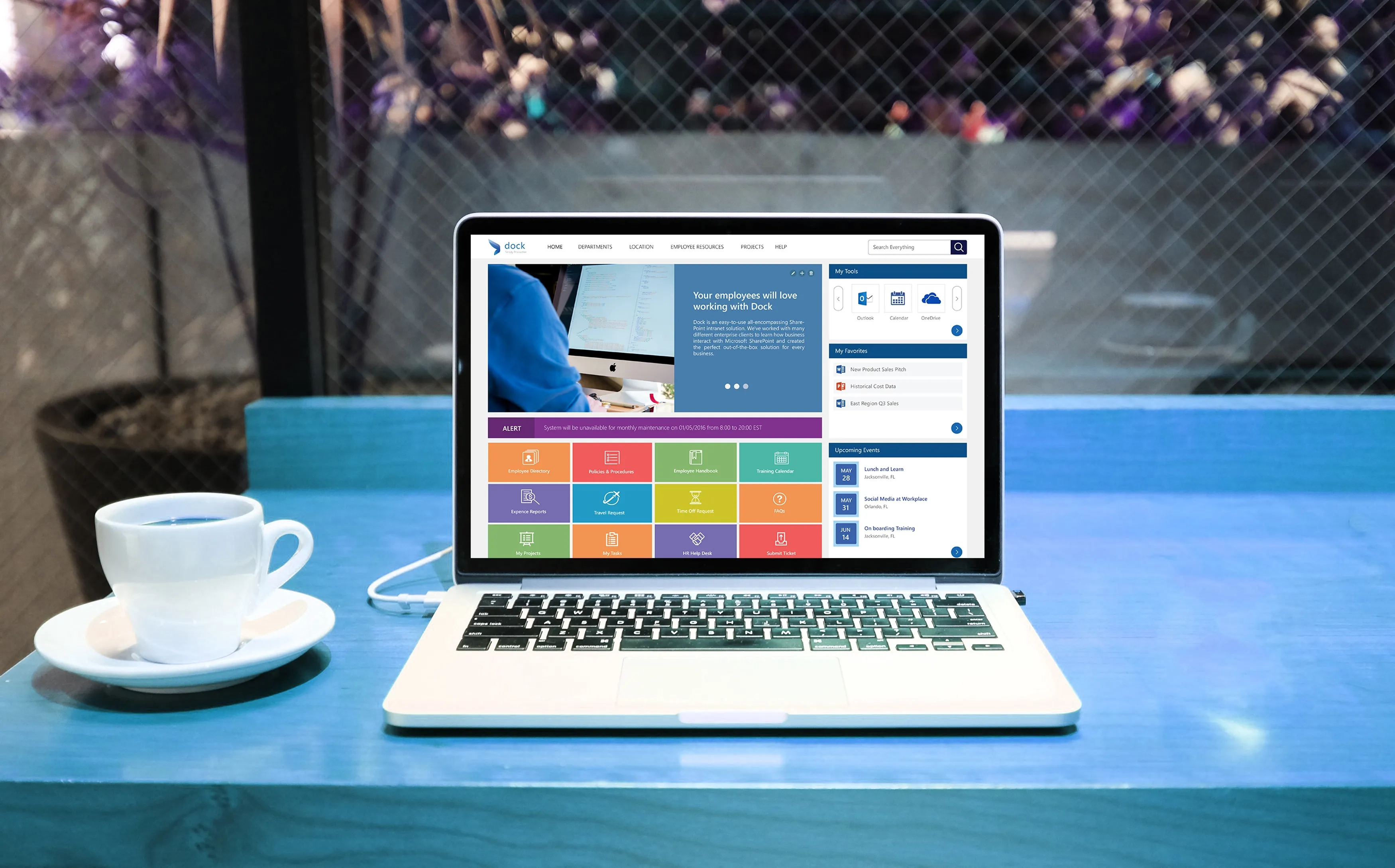
Businesses can also take steps to identify and avoid unconscionable contracts. It helps them mitigate disputes, lawsuits, and damaged relationships between parties. Using contract management software can ease the process of preventing unethical agreements and ensuring that all ratified contracts are fair and legally compliant. For instance, Dock 365 provides a wide range of tools and features that can help businesses create, manage, and monitor contracts to ensure they are fair and legally compliant.
1. Standardized Templates
Dock provides standardized templates that ensure fair and balanced language in business agreements. Legal teams can review and pre-approve these templates, reducing the risk of one-sided contracts.
2. Clause Libraries
The platform includes clause libraries that offer a database of pre-written clauses that can be added to contracts. Legal professionals draft these clauses to ensure they are legally sound and keep any unfair terms out of the contract.
3. Automated Approval Workflows
Businesses can set up automated approval workflows to guarantee multiple levels of review before finalizing a contract. It helps ensure that all parties have reviewed the contractual agreement and that it is fair and reasonable for all parties.
4. Compliance Monitoring
Dock 365 allows businesses to monitor contracts for compliance with legal regulations and internal policies. They can set up alerts and notifications to identify potential issues before they become problematic.
Check out our competitive plans to learn all about how software can help your business.
.webp)